However, for youth of color—particularly those who have experienced generations of systemic instructional inequities—content alone is not sufficient.
What is often missing is context.
Context provides the social, historical, cultural, and economic framework that allows young people to interpret what they are learning and understand how it relates to their lived experiences. Without context, even high-quality academic content can feel disconnected or incomplete. With context, learning becomes relevant, affirming, and empowering.
This belief is foundational to the work of Bridge Builders Foundation and to the design of effective out-of-school time (OST) programs serving under-resourced communities.
Teaching academic or life skills without contextual grounding can unintentionally create confusion or misplaced self-blame. For example, introducing concepts of homeownership, equity, and real estate investment without acknowledging the historical practice of redlining may leave a young person questioning why their family has never owned property—without understanding that entire communities were intentionally excluded from wealth-building opportunities.
Similarly, lessons on financial literacy that focus on credit scores, interest rates, and access to capital must also address predatory lending practices and structural barriers. Teaching young people how FICO scores work is important, but so is explaining why certain communities face higher borrowing costs, limited access to traditional banking, and disproportionate financial risk. Context does not remove accountability; it provides clarity. It explains why disparities exist and equips young people to navigate systems with informed confidence rather than internalizing inequity as personal failure.
Out-of-school time programs are uniquely positioned to address this gap. Unlike traditional school-day settings, OST environments offer flexibility—allowing space for dialogue, reflection, cultural relevance, and real-world application. They create opportunities to integrate lived experience and historical understanding alongside academic and career-focused content.
At Bridge Builders Foundation, context is not supplemental—it is intentional by design. Programs are built to meet young people where they are while expanding their understanding of what is possible. This includes affirming what students see in their communities, reinforcing who they can become, and exposing them to pathways that may not otherwise be visible.
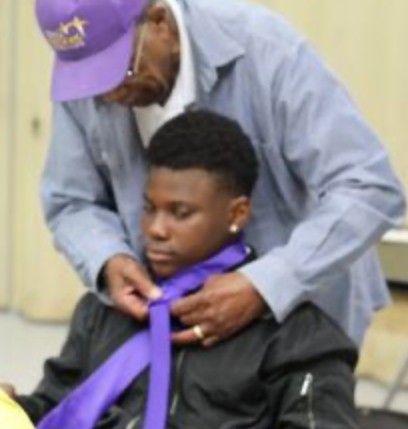
A critical component of this approach is exposure to representation. Bridge Builders deliberately connects youth to field practitioners, professors, scientists, engineers, and thought leaders who look like them and come from similar backgrounds. These interactions shift perception. They reinforce that excellence is attainable, success is relatable, and belonging in professional and academic spaces is not an exception—it is an expectation.
Across many major school districts, student attendance is declining. Chronic absenteeism reflects broader challenges, including disengagement, unmet needs, and erosion of trust in systems that have not consistently served all communities equitably.
In this context, Bridge Builders Foundation presents a striking contrast.
The organization consistently maintains full enrollment—and often waitlists—for its out-of-school programming. Students and families are choosing to participate. Young people are voluntarily giving up their Saturdays, sometimes for up to eight hours on consecutive weekends throughout an entire school semester, to engage in structured, high-quality learning environments.
This level of commitment signals more than participation—it reflects perceived value. It demonstrates that when programs are relevant, affirming, and grounded in context, young people will show up. Demand for expansion further underscores the importance of out-of-school time education as a critical resource in under-resourced communities.


Whether you attend, volunteer, or share, your support helps make learning more open and exciting for everyone.
.png)